
Self-improvement
Exploring Figurative Language through the Lyrics of Paramore's "That's What You Get"
Do you enjoy listening to songs while studying, relaxing, or traveling? Songs is one of the most popular forms of entertainment among students. However, songs are not only meant to be enjoyed. They can also be valuable learning resources, especially for English learners.
Many songs contain figurative language, which is language that goes beyond the literal meaning of words. Songwriters often use figurative language to express emotions, create vivid images, and communicate ideas in a creative way. By understanding figurative language, students can improve their English skills and gain a deeper appreciation of song lyrics.
One song that can help students learn figurative language is Paramore That's What You Get. Besides its energetic melody and catchy chorus, the song contains several examples of figurative language that are easy to identify and analyze. Therefore, it can be an enjoyable way for students to practice their English while listening to music.
What Is "That's What You Get" About?
Before analyzing the lyrics, it is important to understand the meaning of the song. “That's What You Get” tells the story of someone who experiences heartbreak after letting emotion control their decisions. The speaker reflects on a past relationship and realizes that following her feelings instead of her logic led to disappointment and emotional pain.

The meaning of the song was also explained by Paramore's lead guitarist, Josh Farro, in an interview published by Ultimate Guitar, a popular online platform that provides music news, lessons, reviews, and resources especially for guitarists. In the interview, Farro described the song as “pretty self-explanatory” and explained that its message focuses on what happens when you let your heart win and make decisions based on feelings rather than logic.
This explanation helps listeners understand the central theme of the song. The speaker realizes that she allowed her emotions to guide her action without carefully considering the consequence. As a result, she experiences regret and heartbreak. Because the song focuses on strong emotions and personal reflection, the songwriter uses figurative language to communicate these feelings in a more creative and powerful way. Understanding these figurative expressions can help students understand both the song's message and the use of figurative language in English.
Step 1: Listen to the Song Carefully
The first step is to listen to the song several times. Focus not only on the melody but also on the emotions expressed by the singer.
As you listen, try to identify the mood of the song. Does it sound happy, sad, or angry? Understanding the emotions behind the song will help you understand the figurative language later. Do not worry if you do not understand every word. Simply try to understand the overall message of the song.
Step 2: Read the Lyrics
After listening to the song, find the lyrics and read them carefully. Reading while listening can help you notice details that you may miss when listening alone. Highlight words, phrases, or sentences that seem unusual. These expressions often contain figurative language because they are not meant to be interpreted literally.
Step 3: Identify the Figurative Language
Now, let's look at some examples of figurative language found in the song.
Example 1:
Lyrics: "That's what you get when you let your heart win."
Type: Personification
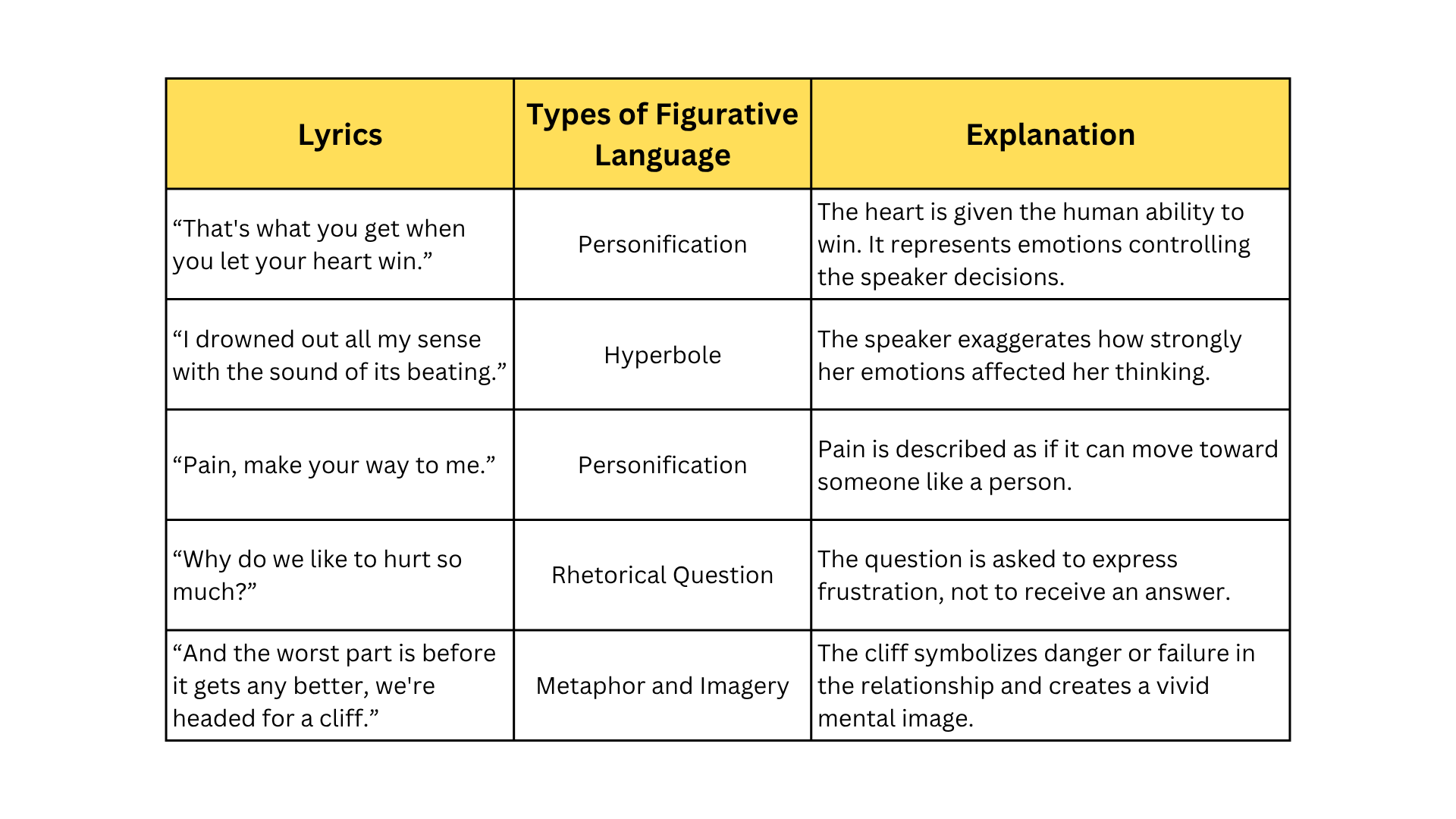
Explanation: Personification is a figure of speech that gives human qualities, actions, or abilities to non-human objects, ideas, or concepts. The lyrics use personification by giving the heart the human ability to win. In reality a heart cannot participate in a competition or achieve victory. The heart represents the speaker's emotions, and the expression suggests that her feelings gained control over her decisions. Through this personification, the songwriter emphasizes the conflict between emotion and logic and shows how allowing emotions to dominate can lead to negative consequences.
Example 2:
Lyrics: "Pain, make your way to me."
Type: Personification
Explanation: This lyric uses personification by giving pain the human ability to travel or choose a destination. The speaker addresses pain as if it were a person capable of responding and coming closer. This figurative language emphasizes the speaker expectation of emotional suffering and makes the feeling of pain seems more real
Example 3:
Lyrics: "I drowned out all my sense with the sound of its beating."
Type: Hyperbole
Explanation: Hyperbole is a figure of speech that uses exaggeration to emphasize an idea or feeling. This lyric is an example of hyperbole because it uses exaggeration. The singer did not literally drown her senses. Instead, she exaggerates how strongly her emotions affected her thinking. The lyric suggests that she became so focused on her feelings that she could not think clearly.
Example 4:
Lyrics: "Why do we like to hurt so much?"
Type: Rhetorical Question
Explanation: Rhetorical Question is a question that is asked to express a feeling or make a point without expecting an answer. The singer is not asking listeners to answer the question. Instead, she uses a rhetorical question to express confusion and frustration. She wonders why people often continue making choices that lead to emotional pain. This lyric encourages listeners to reflect on their own experiences.
Example 5:
Lyrics: "And the worst part is before it gets any better, we're headed for a cliff."
Type: Metaphor and Imagery
Explanation: Metaphor is a figure of speech that compares two unlike things without using words such as like or as. Imagery is descriptive language that helps readers or listeners create mental pictures. The couple is not literally traveling toward a cliff. Instead, the cliff symbolizes a dangerous situation or a possible disaster in the relationship. This metaphor helps listener imagine a relationship moving closer to a painful ending. The imagery created by the lyric makes the emotion in the song feel more vivid and dramatic.
Step 4: Understand the Meaning Behind the Lyrics
After identifying the figurative language, try to understand why the songwriter uses it in the song. In That's What You Get, figurative language helps express the speaker’s emotions more effectively.
Instead of directly saying that the speaker made a mistake by following her emotions, the songwriter uses expressions such as “let your heart win” and “drowned out all my sense.” These expressions show how strongly the speaker was influenced by her feelings and how this eventually led to regret. As a result, the lyrics become more emotional and memorable.
The figurative language in the song also helps listeners better understand the speaker’s experiences and feelings. By creating vivid images and emotions, the songwriter is able to communicate the song’s message in a more creative and powerful way.
Step 5: Take Notes on Your Findings
While analyzing the song, make sure to take notes. You can use a notebook, laptop, or your phone. Write down the lyric, identify the type of figurative language, and explain its meaning. Organizing your notes in a table like this can help you remember the concepts more easily and improve your analytical skills.
Step 6: Practice Explaining the Lyrics
After finding examples of figurative language, challenge yourself to explain them using your own words.
Ask yourself:
What does this lyric mean?
Why did the songwriter use this expression?
What emotion does it express?
How does it support the song's message?
This activity can improve both your critical thinking skills and your English comprehension.
Step 7: Explore Other Songs
Once you finish analyzing That's What You Get, try to apply the same method to other songs. Many songs contain figurative language such as metaphors, similes, hyperboles, personification, and symbolism. The more songs you analyze, the easier it will become to recognize these expressions in English. You may discover that learning English through songs is both fun and effective. In addition, analyzing songs can help you become a more active listener and a more confident English learner.
Learning figurative language does not always have to happen in the classroom. In fact, you can learn it anywhere and anytime you like. A song can be an enjoyable and effective learning tool for English learners. Through Paramore's “That's What You Get”, students can learn how figurative language helps songwriters express emotions, create vivid imagery, and communicate deeper meanings.
By listening carefully, reading the lyrics, identifying figurative language, and analyzing its meaning, you can improve your English skills while enjoying your favorite song. The next time you listen to a song, pay close attention to the lyrics. You may find that behind every line lies a creative expression waiting to be explored.