Review
Memento: A psychological thriller about memory and self-deception
Have you ever lost your memory? Did you ever get it back? How did you try to remember what was missing? You might look for clues by checking your personal belongings. This unsettling experience is exactly what the film Memento explores. This is the reality faced by Leonard Shelby, the main character, who suffers from a short-term memory loss that forces him to depend on photographs, tattoos, and hand-written notes just to remember his daily life after the tragic death of his wife. Through its fragmented narrative, complex characters, and its strong emotional and psychological message, Memento portrays memory as something that can be easily manipulated and reveals how humans often lie to themselves, despite knowing the truth, in order to feel happy.
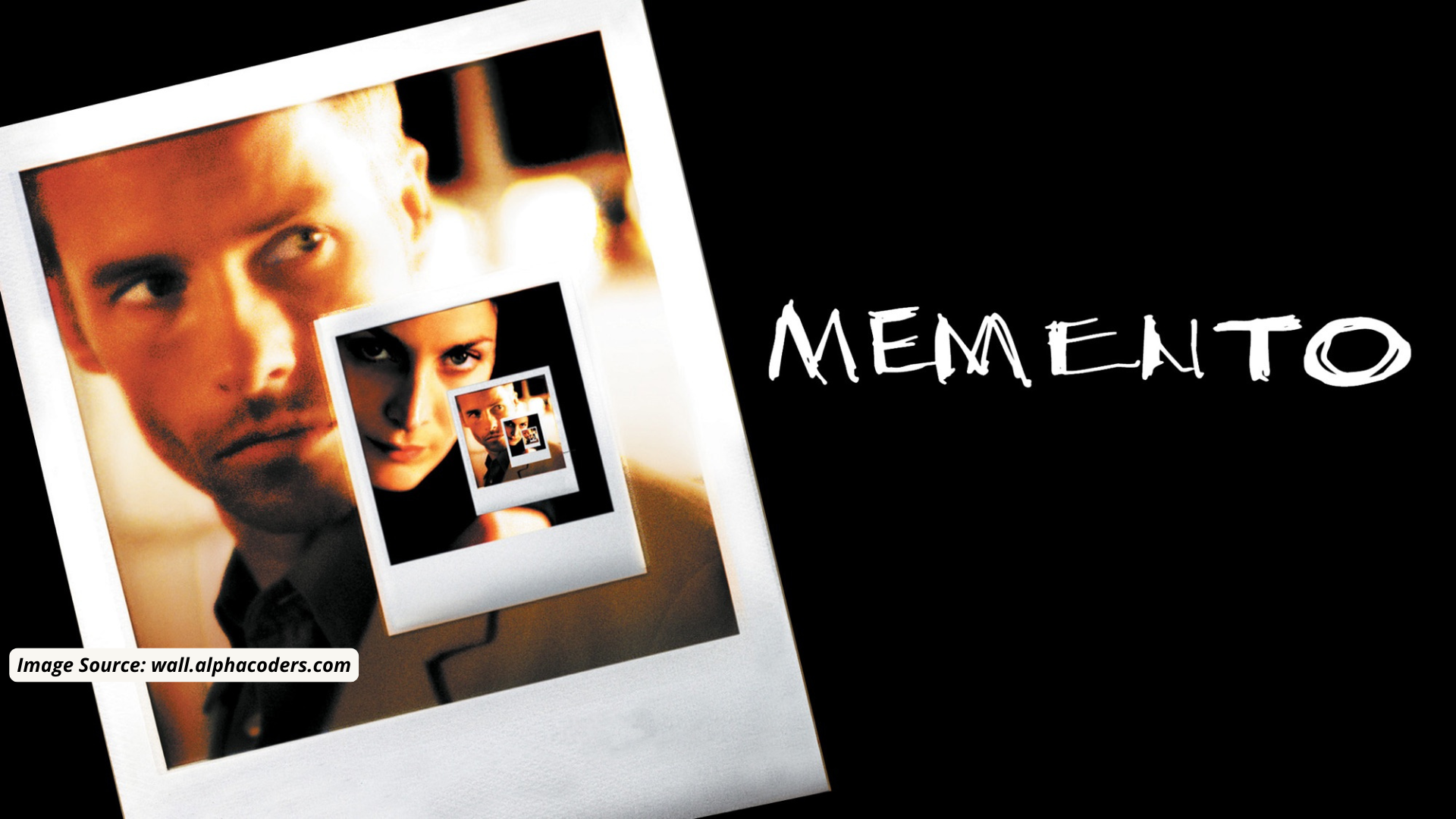
Memento (2000) is a psychological thriller directed by Christopher Nolan. The film stars Guy Pearce as Leonard Shelby, a former insurance investigator suffering from a condition that prevents him from forming new memories. Other key characters include Teddy (Joe Pantoliano) and Natalie (Carrie-Anne Moss), who play significant roles in Leonard’s journey. Known for its experimental storytelling, Memento has become one of Nolan’s most discussed works.
The film follows the journey of Leonard Shelby as he attempts to uncover the truth behind his wife’s death while battling short-term memory loss. To navigate his daily life, Leonard relies on his collections of Polaroid photographs of people he meets and places he visits, handwritten notes that describe events and remind him whom to trust, and tattoos on his body that record facts he believes are important. Throughout his journey, Leonard is accompanied by his only friend, Teddy, and he encounters a mysterious woman named Natalie. Both characters play important roles in shaping Leonard’s actions and the version of reality he chooses to believe.
The reverse narrative structure of this film reflects how memory can be rearranged and manipulated. It presents a unique storytelling approach by using two timelines: a black-and-white sequence that moves forward chronologically and a color sequence that unfolds in reverse order. This storytelling technique is used to give the audience the information in fragments, mirroring Leonard’s inability to access a complete memory. One clear example appears at the beginning of the film, when the audience sees a Polaroid photo fading instead of developing. This reversed image immediately hints that events will be shown out of order. In the color scenes, viewers are dropped into situations without knowing what happened before, such as when Leonard suddenly attacks a man in a motel room. Therefore, the audience will feel like solving the puzzle alongside Leonard. It highlights how people perceive something based on what they see and know. Lastly, the film’s structure leads to the changes of meaning once new information is revealed. It demonstrates how memory can be reshaped.
Leonard’s tattoos, polaroids, and notes allow him to believe in a version of the truth that gives his life purpose. Leonard selects information that is important enough to be permanently tattood on his body. One of his tattoos that says, “John G. raped and murdered my wife,” becomes his main guide for what he believes he must do, which is to find John G. and take revenge. There is also a scene where Leonard looks at his collection of Polaroids and finds a photo of a man with a handwritten note that says, “Do not trust him.” Leonard sees all the information as absolute truths, and he rarely questions their accuracy. He continues to pursue his goals with all the leads that he has in his desperate times. All of these allow Leonard to believe that he has a clear mission, a puzzle that he must solve, allowing him to continue living with a grain of hope and direction.
The film suggests that emotional comfort often matters more than factual truth. Leonard holds on to the memory of his wife’s death as the emotional foundation of his identity. Throughout the film, he is faced with information that does not always match what he has written in his notes. For example, in one scene, Leonard has a Polaroid photo of Natalie with a handwritten note saying that she can help him. However, in another scene, Teddy warns Leonard not to trust Natalie. Instead of questioning this contradiction, Leonard chooses to ignore the inconsistency and continues following the version of information that supports his sense of purpose. As Teddy said “So you lie to yourself to be happy. There's nothing wrong with that. We all do it.” This idea reflects a very human tendency to lie as a coping mechanism, especially in the face of trauma.
Memento has several strengths that make it a meaningful film. First, the storytelling technique that is used helps the audience feel the same confusion that Leonard experiences, showing how memory can be easily changed and controlled. Second, the film clearly shows its main message, which is the fact that memory is not always reliable and that truth can be shaped by personal beliefs. Third, the film strongly relates to real-life experiences. It suggests that feeling emotionally comfortable is sometimes more important than knowing the real truth. Through Leonard’s actions, the audience is invited to think about their own lives and how people often choose to believe what makes them feel better, even if it is not fully true. However, the film also has its weakness. The backward storyline can be confusing for some viewers, especially those who prefer simple stories. Because of this confusion, it can also be hard at times for the audience to feel emotionally close to the characters.
In conclusion, Memento shows how memory is not only fragile but also intentionally shaped. The reverse narrative structure places the audience in the same position as Leonard, forcing them to understand events in fragments and showing how meaning can change when new information appears. Leonard’s dependence on tattoos, Polaroids, and notes further demonstrates how he constructs a version of truth that gives his life direction, even when that information is incomplete or unreliable. Finally, the film reveals that Leonard prioritizes emotional comfort over factual accuracy, choosing beliefs that help him cope with trauma rather than confronting painful realities. Through its structure, characters, and emotional conflict, Memento concludes that memory is not simply about remembering the past, but about choosing which truths we are willing to live with. This film is recommended for people who enjoy psychological thrillers and stories that challenge the way they perceive and understand the narrative.